Friday, 6 February 2009

Journey across the Gran Chaco

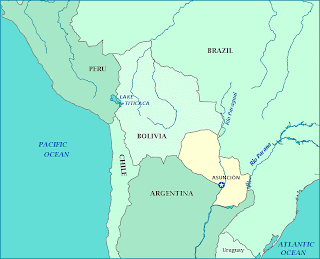
As Han mentioned in the last installment we now had the task finding a way to Iguazu Falls, Argentina. There are several ways and none of them particularly easy or straight forward. So, in true backpacker fashion we went for the most exciting route through Paraguay and the Gran Chaco.

Leaving Samiapata by colectivo taxi is the norm but after siting in the square for an hour it looked like we were the only ones heading out of town that day. We had only one option - to pay the price of four people. The mammoth journey began as we hurtled round corners and roads became gravel tracks and later became littered with speed bumps.

Once we arrived in Santa Cruz, at around 17:00, we made our way to the bus terminal and haggled for a ticket to Asuncion, the Paraguayan capital. Sometimes choice becomes a problem and as there were numerous companies going that way, all offering the same discount, all under exaggerating the length of time it would take and all promising a clean, safe bus…haha! We bought the $55 ticket that all we knew would get us to Asuncion and then on to Ciudad del Este, on the Paraguayan border, somehow.

As the sun went down the heat remained, the terminal was throbbing with people and fumes. Undercover police marched around checking passports and the Bolivian drug police, the FELCN, searched every bus coming in and going out, the sniffer dogs were brought out and paraded up and down our luggage. Mine was picked out and I had great pleasure in taking out the Malaria tablets the dog had caught a whiff of.
The night past on our bumpy bus with babies screaming and the smell of the toilet that was centimetres from our heads. As the sun rose the following morning the sight of dusty roads and the endless scrub of the Chaco greeted us. The only amusement that I could find was the conductor looked the spitting image of Ben Brewster (TV Director extraordinaire), maybe he was a long lost brother?

The Lonely Planet Guide to South America describes the Trans Chaco as a journey for “hearty souls” and by the 15:00, 18 hours in, my soul wanted to get out and walk. The Chaco occupies 60% of Paraguay and it is largely desert and scrub land with this single dirt track through it, connecting Bolivia and Paraguay. The sun was the hottest we had experienced and the lack of water in the toilet system produced an unbearable smell. The sweat was pouring off us as the bus twisted and turned. The only ventilation was, of course, our window which when opened filled the coach with a cloud of dust, even so anything was better than the smell of that toilet!

It soon became apparent the timings we had been told were as far from reality as we were from a hot bath in a Hilton. By late afternoon we arrived at the Paraguayan border control and after the usual sitting about for half an hour we were ordered to line up all our belongings for the sniffer dog and police checks. The burley and officious looking police were completely shown up when they brought out their mangy looking drug dog. He had other ideas and rather than being keen to hunt out drugs, he kept running off into the scrub and playing with his ball.

We rolled on and around 23:00 we were arriving in Asuncion and searching for our midnight departure to Ciudad del Este. Simple things count for a great deal when traveling by bus and the cool, clean and quiet ambience of this new bus was a world away from our Chaco chicken coup. We awoke as we were pulling into Ciudad del Este terminal, it was 5am. Inside the terminal people were slow and sleepy, the air was cool and refreshing and our 6am local bus to the border arrived promptly. A twenty minute ride and we were being dropped by immigration, exit stamps stamped and we were waiting for the next bus across the ‘Friendship Bridge’. Linking Paraguay, Brazil and Argentina this is a major union for commuters who work in any of these countries. The tri-border crossing was a hum of moto-taxis, colectivos and pedestrians. After sometime we caught a bus direct to the Argentinean immigration and then on to the town of Puerto Iguazu, Argentina. By midday our thirty-nine hour journey was over and we were relaxing on the poolside of Residencial Amigos.

Monday, 2 February 2009

Samaipata

Our second escape from La Paz was to head East, towards Santa Cruz, and to a small village called Samaipata on the edge of the Amboro National Park. A world away from La Paz, Samaipata has a mild climate, few inhabitants and the most stunning scenery. We stayed in a place called El Jardin where we rented a small Cupula to stay in, a mud built building with a mattress on the floor upstairs and a small table downstairs.

We went horse riding around the town, and played with some of the animals from a wildlife refuge down the road, including a very friendly red squirrel called Skippy, and a rather sulky howler monkey. We found a guide called Carmel who lived in the town and agreed to take us on a walk up into Amboro and into the cloud forests. It was like being in Jurassic park, the forest was calm and quiet, everything covered in moss with giant ants climbing over everything and beautiful butterflies flying everywhere. The deeper into the cloud forest we got there began to grow ferns, of all different sizes and types. We reached one valley in the forest where the fern trees were giant, some reaching 6 or more metres high.

Unfortunately our money ran out too quickly, and with no cash point nearby we only managed to spend 4 days in Samaipata. It definitely gave us a new view of Bolivia though, a much more tranquil and peaceful one which we hadn't seen elsewhere. If we'd have had more money with us I think it would have been hard to get us to leave. We began to head towards our next stop - Iguazu falls in Argentina - there was just one thing in our way, Paraguay.

Friday, 30 January 2009

Escape from La Paz - Part 2

Back in La Paz we seem to have gotten stuck in the black hole once more, mending our forever ill stomachs (one of the pleasures of Bolivia), getting out of breath constantly from walking up the many hills, and guiltily enjoying the pleasures of the very americanised chain of coffee shops, Alexander Coffee. If you´re in La Paz or head there soon, go there just for their hot chocolates - best I´ve ever tasted.

For some reason I let James drag me away from the safe and warm confines of Alexander coffee, and convince me to take on another of La Paz´s backpacking legends. The worlds most dangerous road. Having never been mountain biking before, the idea of my first attempt being on a winding gravel road with a very deadly reputation didn´t fill me with joy, nor did the fact that it was rainy season - and this meant that some companies ceased to offer the ride, deaming it ´too risky´, or doubled their prices to account for the extra care taken. Great! Despite knowing this we decided to go with the cheapest company we could find, and I had butterflies that felt more like helicopters in my stomach on the morning of our ride.

We began the ride at the freezing and wind-swept La Cumbre (4,700m/15,400 feet) supposedly surrounded by snow-covered peaks and fantastic views - not that we saw any of these as there was a thick fog present at 8.00am when we started. Shaky at first, slightly terrified and with numb hands I quickly took up my position at the back of our small group. The first section is on a twisting tarmac road, which descends rapidly down to a checkpoint where we stopped for breakfast. I was beginning to gain a little bit more confidence by this point but still insisted on James staying nearby incase I went arse over handlebars.

The next section actually entered the Yungas, becoming hotter and wetter as we descended. This was the most challenging part of the ride. I nearly cried when our instructor told us we still had about 4 hours to go! My hands and bum were killing already, and we hadn´t even hit the gravel yet. This infamous narrow dirt road is cut precariously into the side of the mountain and descends 2,000m (6,500 feet). This is where the accidents happen, it´s estimated that every year 200 to 300 people die on this winding road less than 50 miles long. I asked our instructor when was the last time a biker died? He looked deadpan at me and said that two English people went over the edge last week. The whole group went silent, then he burst out laughing, no doubt at the look of horror on my face.....then said ´´I´m joking, they weren´t English, they were Argentinian´´.

So we began the decent, with 1,000m+ (3,300 feet) sheer drops off to our left and hulking rock overhangs and cascading waterfalls to our right, we rode along, me completely ignoring our instructors advice to stick to the tire tracks on the left (near the sheer drop!) and sticking as close to the inside wall as possible. Followed by our support vehicle behind, a constant temptation to give up and jump in the van was hard to ignore. Thankfully, since March 2007 the majority of traffic has stopped driving down the WMDR, and now drives down the new road, so we didn´t have much in the way of vehicles to contend with, just other groups of mountainbikers who seemed to have a death wish and would zoom past at breakneck speed with little warning. Every now and then there would be a memorial plaque on the side of the road, some frighteningly recent, just to remind you what a stupid thing you were doing.

As we descended it began to get progressively hotter and dustier. And after 3 or so hours we made it to the bottom, a small town called Yolosa (1,100m/3,600 feet) deep in the Bolivian Yungas. I was amazed to be alive, and had actually began to enjoy the ride once I´d gotten the hang of it. I even managed to up my position in the group by one, giving up the last place position to a Colombian girl who was even more scared than I was. We were then driven to a hotel with a swimming pool to try and ease our quivering muscles and have some lunch. I definitely felt a sense of acheivement for managing to make it to the bottom. Thankfully I only found this BBC article after we´d been on the bikes, as I´m sure I would´ve chickened out if I´d read it before!

Wednesday, 28 January 2009

Amazonas Adventure

To our huge relief the weather held and the our flight with Amazonas Airlines went ahead. Flights to Rurrenbaque, in the amazon basin are renowned for being cancelled or delayed in the rainy season due the runway simply being grass. The only other way to get to Rurre is by the infamous 18 hour bus/roller-coaster so we were keeping everything crossed for our 45 minute flight to go ahead. We squeezed onto the 17 seater plane and in true South American style bumped into friends, Juilen and Charlotte who we had last seen in Torres del Paine, Southern Chile. The flight went as smoothly as a small tin can in turbulance can but only 45 minutes later we were stepping out into 40 degree heat with about 100% humidity.

Rurre felt a world away from La Paz´s cold and antiplano climate. It was more like being in africa with mosquitos the size of your head, the heat and buzz of a small town - oh and lots of soldiers walking around with machettes. After finding a flee bitten hostel for the night we headed to a posh hotel which had a pool and met up with Julien and Charlotte. From Marseille, they are travelling South America whilst on honeymoon and were also heading into the wilderness.

We did a bit of classic backpacker shopping around, always having to find the best deal even though we`re in the cheapest South American country, and decided to go with the company Fluvial Tours for 450 BOB for a three day expedition into the Pampas. This was an incredible price and the service was brilliant. The following day we met with the six other guys in our group; Paola from Peru, Andrew and Annelie from Oz, Doris from the Netherlands and Sarah and Michael from Ireland. We boarded our rickity jeep and drove for about 2 hours to the start of the wetlands and waterways. We arrived in the middle of nowhere, the sun was baking and all of a sudden another boat (dug out canoe style) arrives, returning from a three day tour with punters. As they disembarked we saw one girl covered from head to toe in mosquito bites, handing out the warning that the mozzies here could bite through anything. Then would you believe it behind her was Thomas and Loes from our Salar de Uyuni journey. A very bizarre coincidence but then as we keep realising South America is a very small place!

The next three days were incredible and within ten minutes of cruising down the waterway we were spotting Howler Monkeys, Turtles, all sorts of birds, Caimen and the alusive Pink River Dolphins. We reached camp by late afternoon which was situated on the bank of the river. Our huts were on stilts as the camp was also home to a whole host of animals including an agressive Caimen and toothless Aligator. Returning from a trip down river became a mini adventure of it´s own when you had to jump the caimen or dodge sticks being thrown down from the trees by Capuchin Monkeys. Each day was awe inspiring, and our luck the second day continued as we went looking for an Anaconda. After a sweltering walk across the boggy plains we eventally found one. It was around three metres long and moved with effortless speed through this partially submerged pasture. The attack of the mosquitos went unoticed whilst we were striding through bogland but on return to the camp we saw that Han´s back was covered in bites, and they´d managed it through 2 layers of clothing. We were all hot, stinky and gagging for a swim. We changed and cruised down river to where we´d spotted some river dolphins earlier on. Before you could say Bolivian referendum results we were jumping into this amazonas waterworld and swimming with pink river dolphins. Now, swimming in the Amazon, which has Caimen, piranas, Aligators, flesh eating diseases etc and all that ´hype´ wouldn´t normally stop me, but when the dolphins suddenly left the scene and we were still splashing around all those Natural History programmes of young wilderbeast being pulled under by crocs came flooding back. Needless to say we all hopped out sharpish!

The final day came and we went pirana fishing, before we knew it we were arriving back where our jeep had set us down two days before. As we bounced along the dirt track to Rurrenbaque the darkest clouds formed and the winds picked up. The heavens opened and our flight back to La Paz the next day evaporated in front of us. That night we had a few cheeky cocktails in the Mosquito Bar with the group along with Julien and Charlotte, who were back from their jungle tour.

Customer service isn´t something you should expect if you come to Bolivia and Amazonas Airlines are the epitomy of this. Our flight ended up being delayed for five hours and we had to force them to store our luggage. Once we were about to leave for the airport we were told we would have to pay more money for a transfer to the military airport, as they´d rescheduled our flight from there! All I wanted was some sort of drinks voucher to make me feel like a valued customer or some stupid rep telling us what the hell was happening. Alas, no not here and not with Amazonas. We eventually made it back onto the little plane, and took off headed for La Paz, sad to be leaving the Amazonian wilderness that had been incredible to explore.

Wednesday, 21 January 2009

Escape from La Paz

There´s something of a black hole quality to La Paz that makes people stay there longer than they ever intended to. It´s the worlds highest capital city located at 3,660m, so the altitude could be something to do with it. It´s also tiring to walk around, with central La Paz sitting in the bowl of a valley, high up in the altiplano, it´s districts and neighbourhoods spread outwards and upwards, with some areas looking like they´re literally clinging onto the side of the valley. As we had hit Bolivia in their summer, it was also rainy season, so days would start in glorious sunshine, and undoubtedly end with torrential rain. As in the rest of bolivia it´s also incredibly cheap to stay here. We found a great little place called Hospedaje Milenio which cost us just 27 Bolivianos each a night for a private room (about 2.70!), there were countless places where you could buy an Almuerzo or 3 course set lunch for about 20 Bolivianos, and the street food and fresh fruit juices available cost next to nothing and were really tasty.

We initially spent a few days recouperating from various ailments, getting our bearings and getting used to the constant protests passing on the street, it only took a handful of occasions of us jumping out of our skins to get used to the firecrackers that go off all day long, and the particularly scary looking police men with big guns! One of the books I bought along on the trip from home was Marching powder, written by Rusty Young about the experiences of a British man, Thomas MacFadden, who had been looked up in La Paz´s San Pedro Prison - for drug trafficking offences. The book is fascinating to read, as San Pedro Prison is renowned for being a society within itself. It´s a world away from how prisons operate in the UK. Inmates at San Pedro have to buy or rent their accommodation, they often have jobs inside the community, and their families live inside the prison too, children and all. There are no guards inside the prison, only on the prison walls. There are different sections to the prison, ranging in prices for a cell, complete with restaurants, hairdressers, churches. Those with money can live in comfort, with most amenities available to people on the outside, some inmates have even built extensions onto their cells. The place has become a thing of backpacking ledgend, as for a price, you can go inside the prison and have a tour of the institution.

We were both keen, so we headed for San Pedro Plaza, where we´d been told that a South African lady would approach us and arrange for us to get inside the prison. After 10 minutes walking around the plaza, feeling slightly stupid and beginning to think of chickening out, she appeared, told us the protocol, and we headed toward the prison gates. We´d been told that our guide was a Portuguese guy called Louis Felipe, we had to pass through the guards, whilst hiding our camera, threw the prison gates and into crowd of waiting inmates. Thankfully Louis Felipe was waiting for us and introduced us to our security guards for the trip - three rather big but thankfully friendly looking inmates, and the tour began. It was an amazing experience, Louis Felipe was like the Godfather, he´d only been inside the prison for 7 months but he seemed to have the respect of all of the other inmates. As he walked us around the different sections of the prison, he introduced us to people, showed us in some of the cells, complete with TV´s and carpet, the football pitch and games room, telling us when it was safe to take pictures, out of sight of the guards. He told us stories of fights and stabbings that had occurred - it seemed that there was no law inside the prison, other than what the most powerful of inmates implemented. At the end of the tour we were taken into a small room, where we´d been told that we´d need to tip our guards, as well as Louis Felipe for ´letting´ us use a camera. The prison is possibly most infamous for the quality of its Coke - made within the walls of the prison - offered to visitors at 100 Bolivianos for a gram, some visitors also pay extra to spend a night at the prison.

Once on the outside it sunk in what a strange experience that had been, definitely one of the best tours we´d taken so far. Thankful to be on the outside of the prison walls we began to plan for our next trip - and we finally managed to escape La Paz, and headed North. This time our destination was Rurrenabaque, a town in Bolivia situated in the Amazon Basin.

Wednesday, 14 January 2009

Copacabana and Lake Titicaca

Who said the buses in Bolivia were just chicken coups? Luxury can exist here and the El Dorado bus from Sucre to La Paz was our best yet in South America. With only three wide, fully reclining seats making up the width of the bus we slept better than in some hostel beds. By early morning we arrived in La Paz and said goodbye to Pete who was staying there. We we´re soon off further north on the 8am local bus to Copacabana and Lake Titicaca. The bus takes about 3.5 hours, including the highlight of the journey, a ferry crossing. Well simply things hey. All of us on board got off the bus as it drove onto a large wooden barge, along with a couple of cars and sheep. We all hopped on a speedboat and crossed seperately watching our bus, and bags, precariously bob along.

Copacabana sits beside Lake Titicaca and although it has a touristy bitterness it isn´t too bad a place. Time here was short however and dictated by there being no ATM. We checked into the hostel called La Cupula which was gorgeous, clean and overlooked the the town and bay. It was so nice in fact that we decided to stay for an extra night. We would have to change rooms and pay a little more which was fine, but the hostel actually had some trouble getting previous occupants out, resulting in our room being upgraded to a holiday cottage with private kitchen and bathroom - cashback! For the first time in Bolivia the weather really warmed up and the sun shone. On our third day we decided to get up early and catch the boat to the Isla de Sol, one of Lake Titicaca´s inca settlement islands. After a jam-packed two hour ride we arrived at the northern port and eventually arrived in time for a cafe con leche. The island is split into three communities and like everywhere in Bolivia everyone wants their piece of the cake. Consequently you´re supposed to pay a toll as you walk between the north, central and southern zones. The northern section is denfinately the more touristy as here lies the ruins of the Inca sacrifical sights. The island is stunning, and as you walk along the stone pathway from the north to the south the sun highlights the crop terraces built up by the Incas. We reached the southern end of the isle in about 3 hours but felt shattered due to the altitude. We found a bed for the night in a small hostel for 25 bolivianos (two pounds fifty!) and that night the temperature dropped. A hale storm insued and our tin roof amplified the giant balls of ice throughout the night. Tucked up under layers of blankets we woke to another beautifully clear but crisp morning over looking Lake Titicaca.

That morning we caught the early boat back to the mainland and jumped on the bus back to La Paz (avoiding the more expensive `Tourist Bus` that the tour operators on the highstreet try and sell you). By the afternoon we were arriving in La Paz amd immediately thrown into the hustle and bustle of this crazy, wintery and mountainous city.

Saturday, 10 January 2009

The Mines, The Giant with Gold Teeth and Sucre

Potosi was our next destination and except for Pete, it was where we left most of the group from the Salar de Uyuni tour. Potosi sits at 4060 metres and holds the title of the highest city in the world. Just walking two hundred yards here leaves you breathing like you´ve run the Bristol 10K. During our travels we´ve spoken to a lot of travellers coming down through Bolivia. Innevitably the ´danger stories´ and muggings are what most people harp on about. Consequently, we dived into a cab like petrified sheep on arrival in Potosi and headed for a hostel the Lonely Planet raves about - Koala Den. Well I think LP needs new authors as it was very average and the manager was one of those over friendly "I lurv you Eeenglish, I lurv London" creepy sort of managers. We only stayed for one night and the following day, leaving a wimpy Hannah behind, Pete and I headed off on a tour of the Potosi Mine.

The working mine began life for gold and silver but nowadays the extraction of minerals is all that remains. It has one of the worst, if not the worst health and safety records in history, and since it opened, 200 years ago, over 8 million people have died. Extraction is by hand and usually father and son teams do the work. Once you start working in the mine you have a life expectancy of ten years due to the asbestos and harsh conditions. So, of course, we decided to go down it for a few hours. The mine sits above Potosi at around 4600 metres and the tunnels go deep into the mountain. It´s a surreal and unsettling experience meeting a 17 year old boy 200 metres below ground digging for his livelyhood. We helped him dig out a section and load it up for 20 minutes, which was exhausting at that altitude. As I climbed back out of the small tunnel section using a series of wooden ladders and rock climbing skills I was face to face with asbestos fibres covering the walls. Whilst your down there, the custom is to give the workers coca leaves, cigarrettes and dynamite in return for you being a idiotic backpacker getting in their way. Mining is still the main industry in Potosi and so it is set to continue for many more years to come. On my way out I met the 17 year old´s Dad who was returning to load up a truck with 1 and 1/2 tonnes of rubble, each truck may get him and his son 35-45 Bolivianos (3.50 - 4.50 pounds).

That afternoon the three of us were off to Sucre, the judicial capital of Bolivia, and the fastest way was by taxi. We thought nothing could be as uncomfortable as the bus the day before but we were mistaken as myself and H were joined in the back by a giant Bolivian man dressed from head to toe in denim. The drivers music was blarring out 80s classics remixed by a Bolivian pan pipe band as the giant turned to us and smiled displaying his full set of gold teeth. The journey was spent leaning into bends as our driver hurtled round corners beeping at people and livestock crossing the road that he was heading for. After 2 hours of this we arrived in Sucre and were pleasently suprised by its palm trees and colonial arcitecture - a far cry from Potosi.

Through default we found a great hostel called La Dolce Vita. It was modern and clean, and unlike a lot of Bolivia so far, did not smell of wee! The days passed too quickly in Sucre whilst we recharged our batteries in this beautiful city. It is time to move on and from Sucre we are heading to Lake Titicaca and the lakeside town of Copacabana.